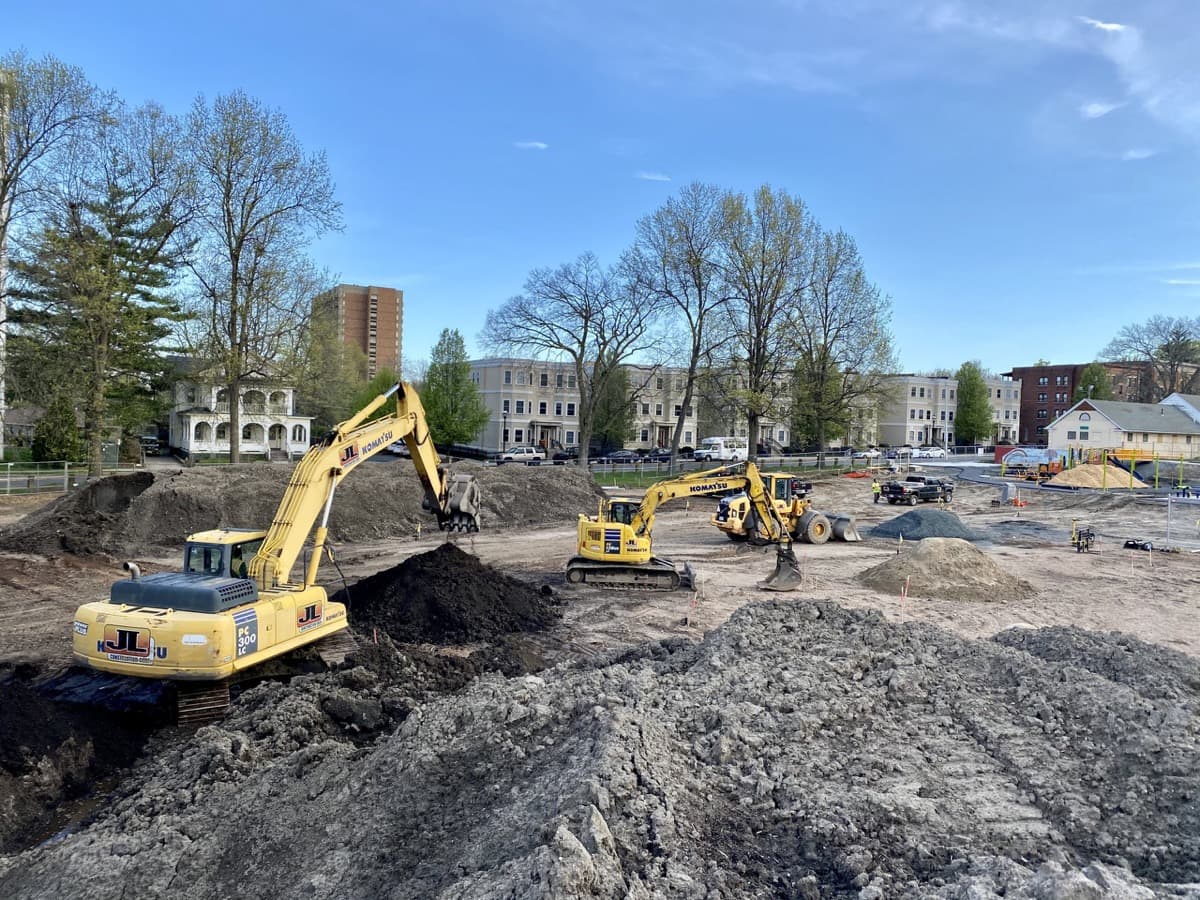
Service Overview
General Contractors of Austin manages demolition across Austin, TX with detailed coordination from preconstruction through final turnover. Our team structures each plan around permitting, site logistics, trade sequencing, and quality control so ownership groups can make decisions with clear milestones and dependable field reporting. We keep communication direct, align schedules to real procurement constraints, and deliver scopes that match operational goals from day one.
Austin is in a constant state of demolition and reconstruction, and the scale and variety of demolition activity in this market is unlike anywhere else in Texas — within a single month, our crews can be working on selective interior strip-outs in an East Austin warehouse being converted to creative office space, full commercial teardowns along the North Lamar corridor making way for mixed-use development, slab removal from a Barton Hills residential teardown in limestone-bearing terrain, and full-block commercial demolition along the US-183 innovation corridor. The geology beneath Austin is defined by the Balcones Escarpment, which runs roughly along the IH-35 corridor and creates a sharp transition between the limestone-bearing terrain of the Edwards Plateau to the west — where Austin Chalk, Georgetown Limestone, and Taylor marl create rock-bearing conditions at shallow depths across the central and west Austin commercial zones — and the Blackland Prairie's deep, dark, highly expansive Houston Black clay that underlies the eastern half of the city from IH-35 toward Pflugerville and Manor. This geological boundary means that demolition approach for foundation removal can change from one Austin project to the next depending on which side of the escarpment the property sits on, and pre-demolition soil identification is a genuine planning requirement rather than a procedural formality.
The regulatory environment for demolition in Austin is more complex than in most Texas markets. The City of Austin's Development Services Department manages demolition permits, and the permit application process for structures in Austin's multiple historic overlay districts — which include the East 6th Street National Register District, the Clarksville National Register Historic District, several locally designated historic landmarks throughout the city, and portions of the South Congress Avenue commercial corridor — requires review by the Historic Landmark Commission and in some cases a postponement period that can add several months to the pre-construction timeline if not identified and managed early. Austin's tree ordinance, which protects heritage trees of specified size and species regardless of property ownership, imposes root protection zones and construction exclusion areas around protected trees that significantly affect equipment access and staging on demolition sites where protected trees are present — our pre-demolition site assessment always includes a tree survey and root zone mapping for sites where tree protection might affect operations. The Edwards Aquifer Contributing Zone and Recharge Zone designations cover substantial portions of west and southwest Austin, and demolition operations in these areas require spill prevention planning and stormwater management that exceeds the standard TPDES Construction General Permit requirements.
Austin's pre-demolition hazmat survey requirement under TCEQ NESHAP applies to all regulated structures, and while much of Austin's commercial stock is relatively modern given the city's growth trajectory, the older buildings in East Austin, the Second Street District, Clarksville, Hyde Park, and the original South Congress commercial corridor that predate the 1980s are a substantial inventory that requires careful hazmat investigation before any mechanical work proceeds. The combination of asbestos-containing floor tile, pipe insulation, and roofing systems in pre-1980 commercial buildings and the lead-based paint that was standard on both interior and exterior surfaces before 1978 means that many Austin urban infill demolition projects require abatement scopes that address both regulated materials before mechanical demolition begins. Austin Energy and Atmos Energy serve the city's electric and gas infrastructure respectively, and the dense underground utility network throughout Austin's established commercial corridors — particularly in areas like downtown, Rainey Street, South Lamar, and the Burnet Road corridor — requires Texas811 locates and vacuum excavation for physical service line exposure before any breaking begins.
The scale of high-rise and mid-rise construction activity in Downtown Austin, the Domain, and the Mueller redevelopment area has created demand for selective demolition within occupied and recently vacated multi-story buildings, and our team has experience with the precision required for floor-by-floor interior demolition in structures where adjacent floors, units, or sections remain occupied or must remain structurally sound. This work requires hand tool deconstruction in many areas, careful management of debris chutes and disposal sequencing, and detailed coordination with building management to schedule work during approved windows that minimize disruption to remaining occupants. Material recovery from Austin demolition projects is particularly well-supported by the active local market for reclaimed building materials — salvaged wood beams, brick, and architectural hardware from older Austin structures have an established buyer community in the city's design and renovation market.
Project Planning Context
General Contractors of Austin manages demolition across Austin, TX with detailed coordination from preconstruction through final turnover. Our team structures each plan around permitting, site logistics, trade sequencing, and quality control so ownership groups can make decisions with clear milestones and dependable field reporting. We keep communication direct, align schedules to real procurement constraints, and deliver scopes that match operational goals from day one. In Austin, that kind of planning has to account for dense corridors, layered approvals, and schedules that can shift quickly when site access changes. The first job is to turn the service summary into a delivery model that gives the owner a clear order of operations before crews begin moving materials or opening work zones.
The important part is that the team understands how demolition for austin projects focused on full-scope demolition, selective structural removal, and site preparation for the austin market. turns into an executable plan rather than a general description. When the early discussion covers full commercial teardowns across austin from the burnet road and north lamar corridors through east austin to the us-183 innovation zone under city of austin development services permits, austin chalk and limestone foundation removal in west austin commercial zones and houston black clay moisture management in east austin and ih-35 corridor projects, historic landmark commission and historic preservation office coordination for demolition in austin's multiple historic overlay districts and nationally registered historic areas, city of austin tree ordinance compliance with heritage tree root zone mapping, protection zone establishment, and equipment exclusion planning before demolition begins, pre-demolition hazmat surveys and tceq neshap abatement coordination for older austin commercial and east austin urban infill structures, the contractor can identify where decisions need to be locked, where the schedule needs slack, and where the owner should expect active coordination during the field phase.
Preconstruction Priorities
Preconstruction in Austin works best when design, permitting, and field planning are handled together. That lets the owner see how the project will move through procurement, inspections, and sequencing instead of treating those steps as separate handoffs that only get attention once the site is already active.
We also use the preconstruction phase to organize the likely trade interactions and the major decision points that will affect the job later. The process list of pre-demolition tree survey, historic overlay determination, edwards aquifer zone assessment, hazmat investigation, and city of austin permit preparation simultaneously before mobilization, austin energy and atmos disconnection confirmation, texas811 locate, and vacuum excavation in congested austin commercial corridor utility networks before mechanical work, demolition sequencing plan addressing geology-specific foundation approach, tree protection zone enforcement, historic fabric preservation requirements, and adjacent structure monitoring, controlled demolition with edwards aquifer spill prevention, barton creek and lady bird lake watershed stormwater management, and dust suppression throughout austin operations, material recovery including salvaged wood, brick, and architectural hardware for austin's reclaimed materials market, plus concrete crushing and steel segregation with manifests is easier to manage when the team already understands what needs long lead planning, what needs early submittals, and what must be ready before the next phase begins.
Scope Translation
A strong service page should explain how the scope becomes work. For demolition projects, the useful question is not just what will be built, but how each part of the scope changes the daily rhythm of the job once the project moves from planning into active construction.
That translation helps the team separate design intent from field sequence. When the scope is tied to a specific set of activities, the contractor can stage material, prepare inspections, and keep subcontractors moving in the correct order instead of letting the job drift into a series of disconnected tasks.
Access, Logistics, and City Constraints
Austin projects often have to work around access limitations, traffic patterns, and more complex coordination than a suburban site would require. That means staging plans, haul routes, and field access points should be decided with the same seriousness as the structural or interior work because they can determine how productive the site will be once the schedule is underway.
The contractor's job is to make the field easier to manage, not harder. By mapping where crews can stage, how deliveries arrive, and which areas need protection or sequencing control, the project team can keep the worksite organized even when the surrounding city conditions create pressure on the schedule.
Trade Coordination and Procurement
Large construction programs are usually won or lost on coordination. If one trade is waiting on another, or if a key material package is late, the project can lose time very quickly, so the contractor needs to keep procurement status, subcontractor commitments, and milestone dates visible throughout the job.
That is why a disciplined look-ahead process matters. The team can use it to track long-lead items, confirm the timing of each work package, and keep the owner informed about where the job is moving well and where it needs a decision before the next crew is scheduled to arrive.
Quality and Risk Management
Quality control should be built into the construction rhythm rather than added after the fact. For this kind of work, that means verifying layout, materials, installation steps, and inspection readiness at the right points so the team can correct issues before they get hidden behind later work.
Austin projects can also be exposed to schedule risk from weather, site density, and change management, which makes clear reporting more important. The better the team is at documenting the current state of the work, the easier it is for the owner to understand risks, choices, and next steps without losing confidence in the delivery plan.
Turnover and Closeout
Closeout is easier when the team has been thinking about it since the beginning. Punch items, commissioning steps, record documents, and owner training need to be organized as a sequence so the final handoff does not become a last-minute scramble that slows occupancy or operational startup.
That process is especially valuable for projects that need a fixed opening date or a structured tenant turnover. When closeout is handled well, the owner gets a cleaner transition, the field team resolves issues in a controlled way, and the final stages of the project feel like a continuation of the plan rather than a rush to finish paperwork.
Austin Market Considerations
Austin continues to demand commercial construction that can adapt to growth, density, and changing use patterns. That makes schedule reliability and site awareness especially important because the contractor has to keep the work productive while still responding to local conditions that can shift from one block to the next.
For that reason, the best version of demolition work in Austin is one that stays grounded in real field conditions. Teams that plan carefully, coordinate trades early, and stay transparent about milestones are better positioned to control risk, maintain momentum, and deliver a result that works for both operations and ownership.
Delivery Detail
The most reliable Austin jobs are usually the ones where the contractor can explain how each part of the work will happen in sequence. That includes how access will be protected, which decisions have to be locked before procurement begins, and how the field team will move from initial setup into active production without losing control of the site.
When the project gets to that level of detail, the owner is not guessing about the path forward. The team can compare options more accurately, track what is truly complete, and make better calls when the schedule has to absorb a weather delay, a design change, or an inspection requirement that only becomes visible in the field.